

It is difficult to find a reliable source of traceable Ethiopian coffees so we have developed relationships with farmer cooperatives to bring youEthiopia's prized crop.
But why Ethiopian Coffee?
Because it is so good! And there is a reason why its so good. Ethiopia is said to be the birth place of coffee. The climate and surroundings make it ideal for coffee to grow there, which give it a leg up in producing good coffee. Sure, there are many (MANY) factors that lead to a good cup of coffee, but having the ideal environment for growth does make sure that the process starts right. The nutrient rich soil that is fed with the abundant rain during the rainy season create a nice home for the coffee tree to grow. The mountainous regions in the country with varying altitudes houses coffee with varying tastes and flavor notes depending on the altitude and area it was grown.
The legend behind the origins of coffee…
Oh, and lets not forget the legend of Kaldi. It is believed that coffee was discovered by a goat herder in the fields of Kaffa (sounds a bit like caffine doesn't it?). The goat herder (named Kaldi) noticed that his goats were getting energetic when they ate this mysterious red berry on the mountain hills. He took the berries to the local monks. Once they heard about the effects of the beans on the goats they immediately thought the berries were evil so they threw them into the fire. As the berries began to burn they started smelling this pleasing aroma. It was so pleasing that the monks thought the berries must be from God so they raked up the beans and put them in hot water. They began drinking the delicious mixture which helped them stay up all night for their prayers. Since then coffee has been an integral part of the Ethiopian culture. Ethiopian Coffee Ceremonies are a regular part of life that brings the community together around this beloved beverage.
From there, coffee traveled on the trade route to the Arabian Peninsula and was sent from that shipping port to the rest of the world. Now coffee is grown all over the world. Each place has its unique flavor notes and profiles. It is the beauty and mystery of coffee that allows the world to taste the different flavors from different parts of the world!
Ethiopian Coffee Importers
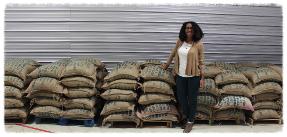
Welcome to Keya Coffee, a family owned coffee importing company! Our heritage lies with Ethiopia and we are honored to bring the prized Ethiopian crop to the United States. Our warehouse is located in Chamblee, Georgia. We aim to be the southeast’s resource for unroasted green coffee from Ethiopia.
Wait backup.. what is an Ethiopian Coffee Ceremony?
As you've seen, Ethiopia and coffee have a very special history together. In fact there is a saying in Ethiopia that goes, “buna dabo naw.” Translated that means “coffee is bread.” Coffee is so central to the Ethiopian culture.
Part of the life blood of any household, the Ethiopian Coffee Ceremony is a time to gather around and to discuss the community, politics and life in general. It is a sign of respect and hospitality to all who enter.
The Ethiopian Coffee Ceremony journey goes from the raw green coffee bean all the way to the rich drink in your cup. The green coffee is first roasted on a pan, which lets off an aroma as the coffee browns. Each guest is able to take a waft of the roasted coffee and experience the pleasing aroma. After the coffee is roasted it is ground and put in the traditional Ethiopian Coffee pot called a Jebena. After the coffee has been brewed, the coffee is then poured in a steady golden stream into little cini cups. Sostenya, meaning three, is the process of having the coffee brewed and served three times to the guest. Coffee is normally served with popcorn or kolo which is a which is a roasted barley snack.
How is coffee grown?
Coffee is grown on a tree. The coffee tree has berries that become red when ripened and inside each berry there are 2 often greenish coffee beans nestled right next to each other. These coffee beans are hard (so don’t try biting into them!). It is from these green coffee beans that coffee is then roasted, ground and brewed into your morning cup of coffee! There are two main types of coffee that are grown:
Arabica: Arabica is the higher quality coffee. All specialty coffee is Arabica, but not all Arabica is specialty coffee. It has less caffeine continent then its counterpart Robusta, but its profile is richer. Arabica is more difficult to grow and is more prone to diseases and insect. As with life, the best things often require more work. It is grown in higher elevations and has the potential for so many unique flavors.
Robusta: Is the lower grade coffee that has increased coffee content. It is easier to grow and is less prone to diseases and insects. It can grow at lower elevations than Arabica making it easier to collect the crop. It is often used as a mix with some blends (especially in espresso) and is often used in instant coffee. Robusta is known for more of a burnt or rubbery taste.
Coffee trees are planted and it takes 5-7 years before it begins to produce coffee for use. Coffee trees normally produce quality coffee for up to 20 years.
In Ethiopia there are 4 main ways that the coffee is grown:
Forest Coffee: Forest coffee is the least handled by humans. The coffee grows naturally in the comfort of the shaded forests. It has not been sown or cultivated by farmers. During harvest season farmers travel to the forest to hand pick the coffee berries from the trees.
Semi-Forest Coffee: Semi-Forest coffee is also grown in the natural habitat, but there has been intervention from farmers to thin the shade and aid in the cultivation of the tree. The farmers help to provide the optimal amount of sunlight/ shade for the coffee trees to maintain the optimal harvest. The coffee is then handpicked in the harvest season.
Garden: Garden coffee accounts for almost 50% of Ethiopia’s production of coffee. Garden coffee is coffee that has been transplanted from the forest into areas that are closer to farmer’s houses. Many of the garden farmers produce limited amount of coffee each season and they join with others in cooperatives to sell their coffee together.
Plantation: Plantation coffee occurs in areas where land has been cleared and replanted specifically for coffee. It is larger areas that have been dedicated to the cultivation and growth of coffee. It is only in these instances that chemical pesticides are used to aid in the growth of the coffee.
In Ethiopia, coffee can only be exported by the Commodities Exchange or by Cooperatives. We purchase our coffee directly from the coffee cooperatives.
Now you can purchase ROASTED COFFEE! Visit the Roasted Coffee tab to purchase some coffee for your home or office!
